Lemons, Bars, and One Extremely Confused Lobster: Ranking Slot Symbols Through History
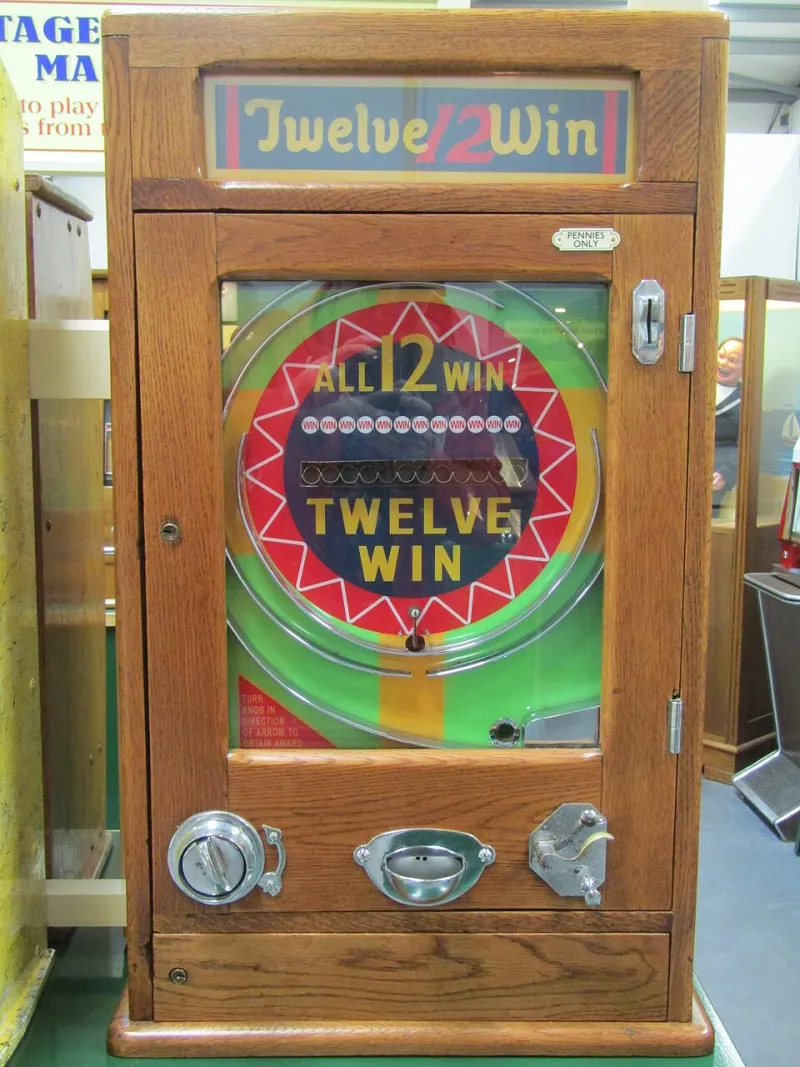
Photo: Kolforn (Kolforn) I'd appreciate if you could mail me ([email protected]) if you want to use this picture out of the Wikimedia project scope. This file is licensed under the Creative Commons Attribution-Share Alike 4.0 International license. Yo
Every slot player on Earth recognizes them: the cherry, the bell, the bar, the lucky seven. They're so baked into the culture that a kid who's never touched a slot machine could still sketch one from memory. But how did a piece of fruit become the international symbol for gambling? And more importantly — how do we explain the lobster?
Buckle up. This is a tier-list history lesson.
Where the Fruit Came From
The origin story starts with Charles Fey's Liberty Bell machine in 1890s San Francisco, which used playing-card-inspired symbols and, naturally, a bell. But the fruit revolution came a decade later, courtesy of a legal loophole.
In the early 1900s, outright gambling was banned in many states. Manufacturers got around it by turning slots into vending machines with prizes: pull the lever, and you might win gum or candy. The symbols on the reels? The flavors of the gum. Cherries, melons, lemons, plums — a reel full of Fruit Stripe energy.
The gum prizes faded, the laws loosened, but the fruit stuck. Americans had already learned to read those reels. Why mess with a classic?
The BAR symbol has a similar corporate origin story: it's widely traced to the logo of the Bell-Fruit Gum Company, whose wrapper featured a pack of gum. Over time, the pack simplified into a rectangle, then the stacked 'BAR' we know today. It is, essentially, a piece of packaging that outlived the product.
The Tier List You Didn't Ask For
Alright — history lesson over, opinions incoming. Here's our ranking of slot iconography, from untouchable to indefensible.
S-Tier: The Immortals
- The Seven. The undisputed king. Lucky number, jackpot marker, and the only symbol that works as a tattoo. If a slot doesn't have a seven, is it even a slot?
- The Cherry. The workhorse. Pays small, appears constantly, and gives every spin a little dopamine. The point guard of the reel.
- The Bell. A direct line back to the Liberty Bell. Classy, historical, and it rings when it hits. Sensory branding before that was a thing.
A-Tier: Beloved and Reliable
- BAR (any version). The double and triple BARs are great value — same icon, escalating stakes. Efficient design.
- The Diamond. Brought Vegas glamour to every corner bar machine. Simple, shiny, universally understood.
- The Horseshoe. Gets a bump for being one of the few 'lucky' symbols with genuinely old folk roots.
B-Tier: Fine, We Guess
- Watermelon. The cherry's larger, less charming cousin. Nobody's favorite, everybody's occasionally savior.
- Golden Coins. Generic, but you can't really hate money.
- The Joker. Works great in card-themed games, feels slightly lost on a fruit reel.
C-Tier: The Themed Chaos Era
- Cartoon animals doing things. The 2000s video slot boom unleashed an army of winking cats and sunglasses-wearing alligators. We're not mad, just tired.
- The Number 777 as a character. When the sevens get faces, we've gone too far.
D-Tier: What Were They Thinking
- The Lobster. Yes, there are lobster slots — famously so, in seaside-themed games. A crustacean as a gambling icon is a leap we've never fully made peace with.
- Food that's still steaming. Animated tacos, pizzas, and burgers on a five-reel grid. We eat enough; we don't need the reels judging us.
- Any mascot winking directly at the player. It knows something. We don't want to know what.
Why the Old Symbols Still Win
Here's the thing: with thousands of licensed, branded, cinematic video slots on the market — games with movie tie-ins, progressive jackpots, and more animation than a Pixar short — the classic fruit-and-sevens style remains one of the best-performing categories in the US market.
Part of it is nostalgia. Part of it is clarity: classic symbols let you read a paytable in five seconds and just play. In an era of cascading reels and expanding wilds, there's real appeal in a game where a cherry means a cherry.
So next time you load up a three-reel classic and see that lemon drift past the payline, give it a little respect. It's been on the reel for over a century, survived gum-prize prohibition, outlived its own branding, and still shows up to work every single day.
The lobster, meanwhile, has some explaining to do.