Last Call at the Crab Legs: What the Dying Vegas Buffet Tells Us About How We Gamble Now
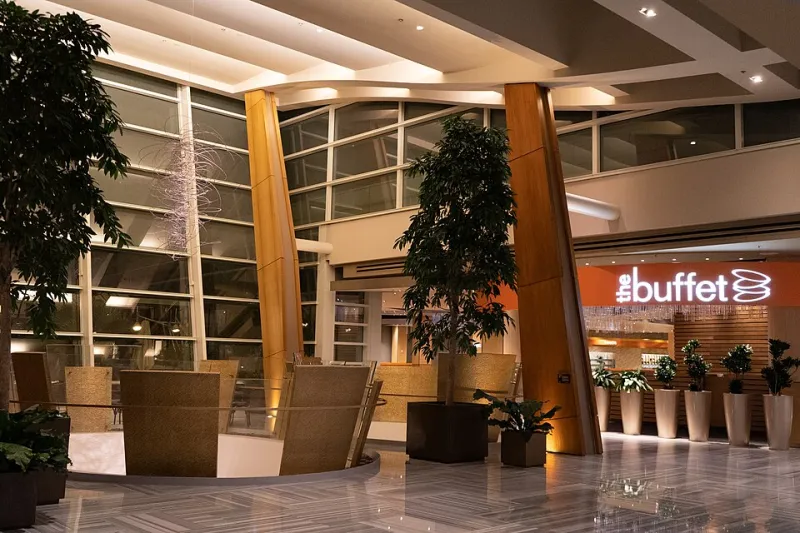
Photo: Jesse James, CC BY 2.0, via Wikimedia Commons
There was a moment — maybe you lived it — when a Vegas trip wasn't complete without waddling out of a buffet at 10:45 a.m., plate number three balanced on one arm, a mimosa sweating on the table, and a plan to hit the slots by noon. The buffet wasn't a meal. It was an event. A declaration. Anything is possible here.
Now the buffets are vanishing. The Rio's legendary Carnival World buffet? Gone. The Mirage? Torn down entirely. The properties that survived are swapping steam tables for "curated food halls" — the kind with a ramen counter, an artisan donut stand, and a line you track on an app. It's more efficient. It's objectively better food. And it's somehow a little sadder.
Here's the thing: the buffet and the casino floor were never separate institutions. They were the same idea wearing two outfits.
The Buffet Was the Casino's Mascot
Think about what the all-you-can-eat model actually said. We have so much, we dare you to take it. No courses, no rules, no waiter judging you for a fourth trip to the prime rib. It was abundance without structure — grab what you want, when you want it, in whatever order feels right.
Sound familiar? That's the slot floor. Nobody tells you which machine to sit at or how long to stay. The whole ecosystem is built on choice without consequence, at least in the moment. The buffet and the one-armed bandit were spiritual siblings: both said the old world's rules don't apply inside these walls.
And the buffets did something the food halls can't. They made you stay. You camped out. You people-watched. You talked to the couple from Ohio celebrating an anniversary. The buffet was a social engine disguised as gluttony, and it kept bodies in the building between gambling sessions.
What We Lost in the Upgrade
The food hall is the buffet's efficient,lonelier cousin. You order exactly what you want, alone, from a screen or a counter. No lingering. No communal table energy. No slow Sunday sprawl.
Now look at how gambling has evolved and tell me you don't see the same shift. The old casino floor — like the old buffet — was a place you inhabited. Modern play, especially online, is transactional by design. You open an app, you spin for twelve minutes, you close it. It's the food hall model applied to wagering: precise, personal, frictionless, and quietly solitary.
Nobody's saying that's a scam. It's just a trade. We traded atmosphere for access. We traded the third plate of crab legs we didn't need for the exact poke bowl we did. In gambling terms, we traded the night at the tables for the snack-sized session on the couch.
What the Industry Could Steal Back
Here's the opinion part: the online side of this business has something to learn from the buffet's ghost.
The buffet worked because it removed anxiety. One price, endless options, zero judgment. The best online gaming experiences channel a bit of that — flat, predictable entertainment budgets instead of open-ended spending; games you can sample freely before committing; sessions that feel like a spread of options rather than a single pressure point. When play feels abundant and low-stakes, people relax. When it feels like a series of transactions, they grip tighter.
The buffet also understood pacing. You were never rushed. Compare that to a modern industry obsessed with compressing every second — faster spins, quicker bonuses, shorter sessions. There's a case that the winning move isn't more speed. It's more room. Games and platforms that let a casual player linger, wander, and sample without pressure are doing what the buffet did: making the house feel generous.
Generosity, even the engineered kind, builds loyalty. Vegas understood that for seventy years. The buffets lost money on paper and printed it in goodwill.
Pass the Plate (One More Time)
Will the buffet come back? Probably not in its peak-excess 1990s form, and honestly, the food halls are delicious. But the next time you fire up a quick session on your phone — a few spins while the coffee brews, a bonus round before bed — remember what the steam-table era knew:
Entertainment used to come with elbow room. The best gambling experiences, online or off, are the ones that let you take a little of everything without anyone rushing your plate.
Long live the buffet, at least in spirit. And somebody check on the lobster.