From Quarters to Credits: How the Arcade Cabinet Quietly Conquered Online Casinos

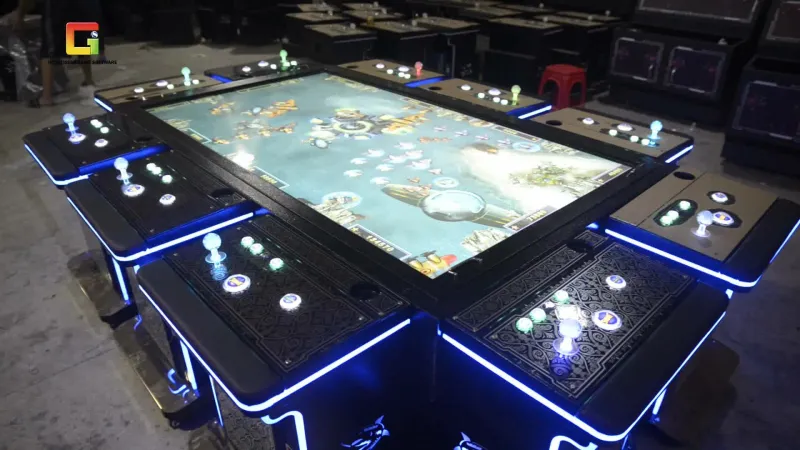
Photo: PattayaPatrol, CC BY-SA 4.0, via Wikimedia Commons
Remember the smell of a mall arcade? Popcorn in the air, the rattle of a coin pusher, the glow of a CRT monitor promising one more try. That world didn't vanish. It got a software update.
Walk through any modern online casino lobby today and you'll spot the descendants of that era everywhere: fish shooter games, coin pusher simulators, claw-machine hybrids, and slots that look suspiciously like Pac-Man's cooler cousin. The arcade didn't die. It cashed in.
The Coin Pusher Never Left
Start with the coin pusher, arguably the most hypnotic machine ever built. Drop a quarter in, watch the mechanical shelf nudge a pile of coins toward the edge, and wait for the cascade. It's part gambling, part physics experiment, part ASMR.
These machines started as carnival attractions in the early 20th century, migrated into boardwalk arcades along the Jersey Shore and Santa Monica Pier, and became arcade staples by the 1970s. Crucially, they survived every moral panic about gambling because they technically rewarded 'skill' — or at least, that was the legal fiction everyone agreed to maintain.
That fiction turned out to be the blueprint.
Skill as a Legal Workaround
Here's the pattern worth noticing: whenever American gambling law tightens, game designers get creative. Pinball was banned in major cities until the mid-1970s as a game of chance. The industry responded by adding flippers — suddenly, it was a game of skill. Claw machines live in the same gray zone. Fish table games, which exploded across the South and in California swap meets in the 2010s, wrapped slot-machine mechanics inside a shooting-gallery interface.
The formula is simple: take a chance-based payout, add a token layer of player input, and market it as an arcade game. It worked in arcades, it worked in convenience stores, and when online casinos went mainstream, it worked there too.
The Sweepstakes Detour
The most fascinating chapter in this convergence is the rise of sweepstakes-style arcade apps. These platforms — often promoted heavily across the Southeast — let players buy 'sweeps coins' through promotions and redeem them for prizes, with game libraries that look like a 1980s arcade got a slot-machine makeover.
Love them or side-eye them, these apps proved something important: there's a massive audience of casual American players who feel more comfortable tapping a cartoon crab than pulling a virtual lever. The arcade skin lowers the intimidation factor. It reads as entertainment first, gambling second — even when the math underneath is pure slots.
Why Casual Players Are Buying It
A few reasons this hybrid style is thriving:
- Familiarity. Players who grew up on Time Crisis and whack-a-mole recognize the grammar instantly. No tutorial needed.
- Agency theater. Aiming a cannon at a fish feels like doing something, even when outcomes are RNG-driven. That illusion of control is catnip for casual players.
- Low stakes, loud feedback. Arcade-style games deliver lights, sounds, and celebration on every interaction — the same dopamine loop that kept kids pumping quarters into cabinets.
- Social texture. Multiplayer fish games, in particular, recreate the arcade's 'playing alongside strangers' energy that classic slots never had.
Where This Is Headed
The line between 'video game' and 'casino game' is blurring fast, and regulators are scrambling to keep up. Expect more licensed arcade IP showing up in casino lobbies, more skill-flavored wrappers around chance-based cores, and more pushback from state gaming commissions trying to decide whether a cartoon cannon is a slot machine in disguise.
For players, the takeaway is simple and a little nostalgic: the arcade never closed. It just found a bigger building. The quarters became credits, the tickets became bonuses, and the kid feeding a coin pusher in 1985 is the same person tapping a fish shooter on their lunch break in 2025.
Game recognize game.